Five Feet of Snow and a 12-Inch Stump
Reflections from the Oregon Logging Conference
One of the old timers at the Oregon Logging Conference was telling stories about winter logging in the Cascades. Five feet of snow on the ground, and the contract still called for sub-12-inch stumps.
That math doesn’t exactly work out.
Everyone standing around laughed when he said it, but the more I thought about it the more that story stuck with me. Those crews logged under conditions most of us would have a hard time imagining today. Long before computers, scanners, and optimized production systems. It was just people, machines, and the woods.
In a strange way that one story ended up capturing a lot of what I was thinking about during the trip.
I’ve been trying to process our visit to Oregon and the Oregon Logging Conference since we got home. Some trips make sense immediately. Others take a little time before the meaning settles in. This one has taken a bit of reflection.
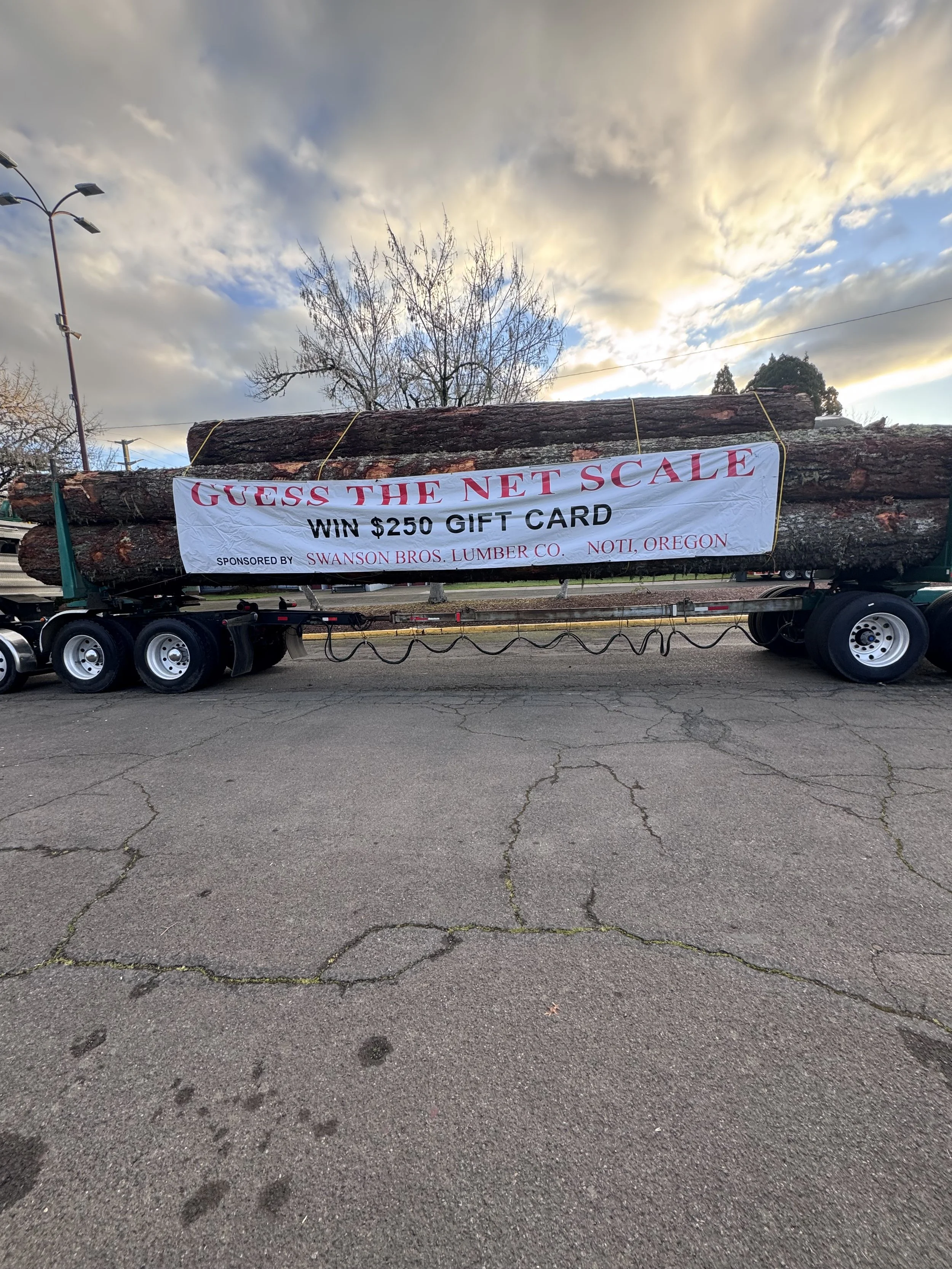
One of the first things that struck me was the contrast. Oregon is widely known as a politically left-leaning state, yet at the same time you are standing in the middle of one of the strongest timber economies in the United States. Logging trucks everywhere. Mills, equipment manufacturers, and communities that have been connected to working in the woods for generations.
The timber culture there runs deep. You can feel it in conversations, in the equipment displays, and in the pride people have for the work.
Walking into the conference was impressive. Machines everywhere, many of them far larger and more specialized than anything I’m used to seeing day to day. Equipment built to move an enormous amount of wood.
For a moment I’ll admit it made me feel a little small.
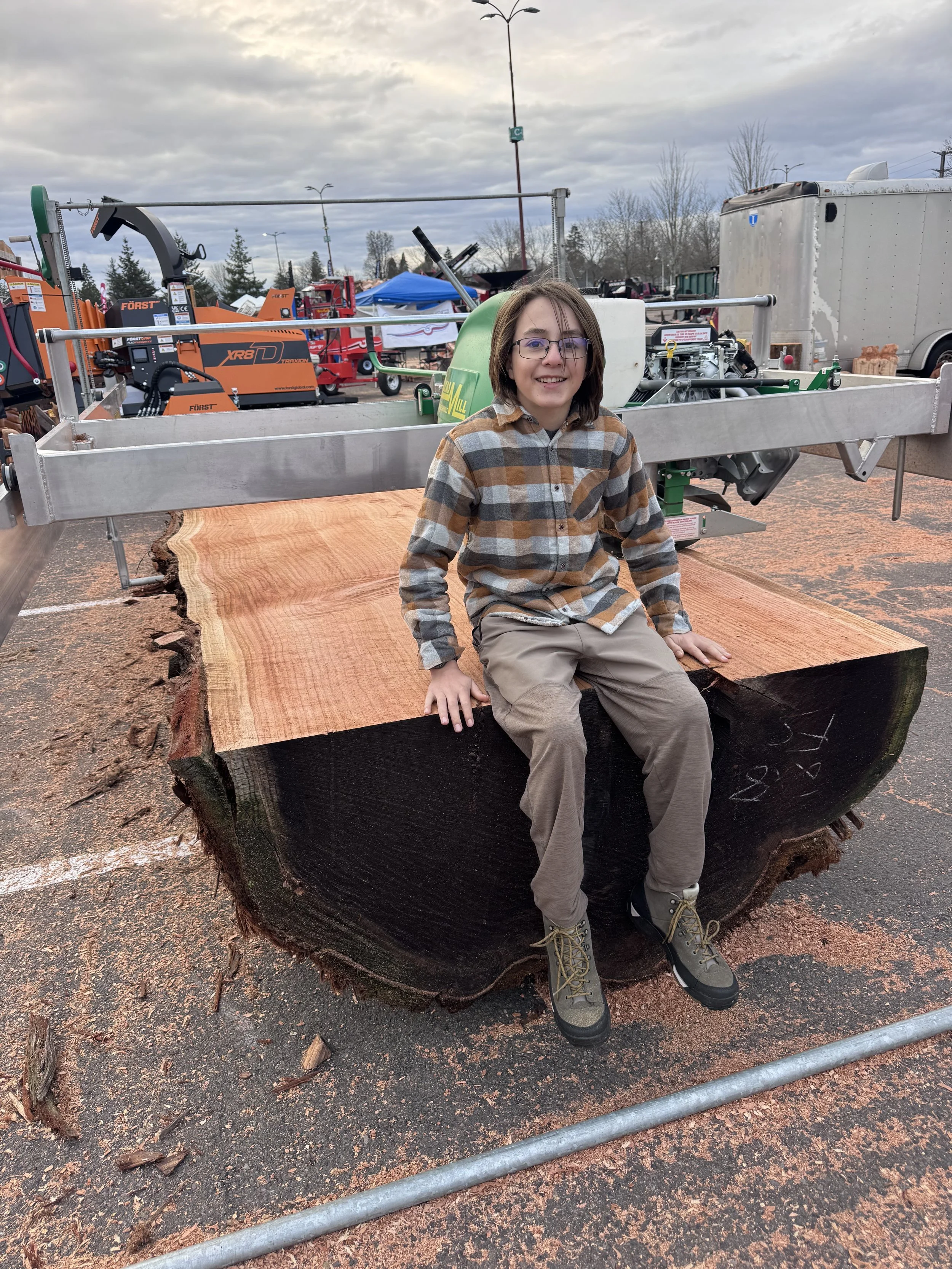
One of the machines I was especially interested in seeing up close was the Wood-Mizer MR200 Multirip. If you spend enough time milling logs you become very aware of how wood holds tension. Trees grow under stress from wind, slope, gravity, and growth patterns, and that stress gets locked into the wood fibers.
When you start cutting a log apart those forces begin to release.
On a bandsaw mill that tension usually comes out gradually. You take a slab off and the board moves a little. Take another pass and it moves again. Sometimes you see boards pick up crown or twist as the log releases its internal stresses.
Watching the multirip run was fascinating because it releases that tension all at once. Boards were coming off that machine straight. Not one of the 2×8s showed any crown. What really surprised me was checking those boards again the next day and seeing they were still straight.
That’s the kind of detail that really gets a sawyer’s attention.
As interesting as the equipment was, the real highlight of the conference turned out to be the people. I had the chance to talk with several sales representatives who had actually come out of running their own sawmills. That says something about the company culture, or perhaps about the challenges of running mills. Maybe a little of both.
The conversations with the older mill operators were the ones that stayed with me the most. These were men who had spent decades working around timber. Many of them had run mills long before modern technology became part of the industry. They talked about winter logging in the Cascades, difficult contracts, and the reality of doing the work when conditions were far from ideal.
Some of those guys have forgotten more about timber than most of us will ever know.
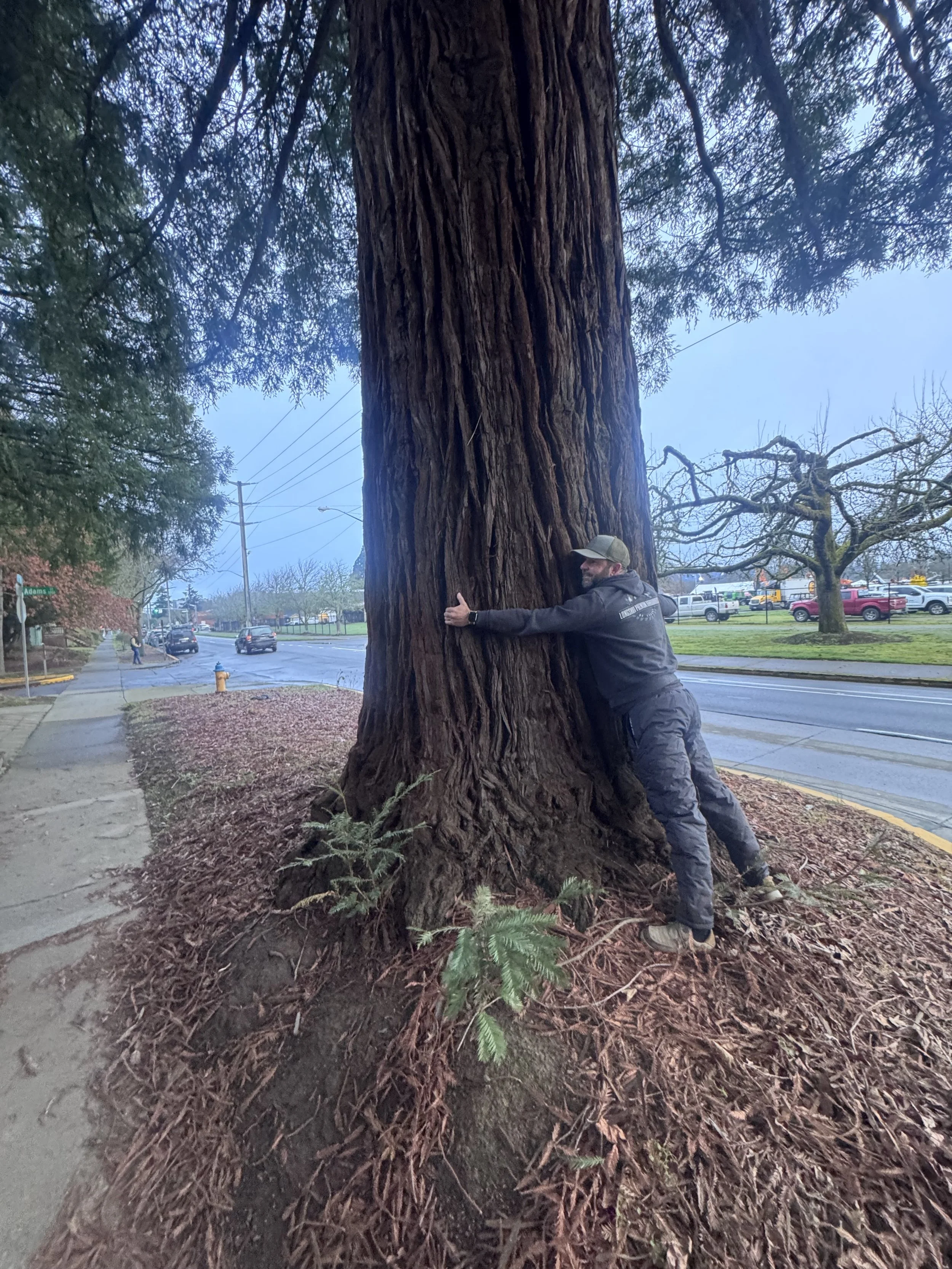
One of them said something simple that stuck with me: you still can only do one tree at a time.
It sounds obvious, but there is wisdom in it. No matter how large the equipment becomes or how efficient the systems get, the work still begins the same way. One log, one cut, one step at a time.
Walking around the conference also made me reflect on something I have felt for a while. Sometimes I don’t feel like I fit the traditional mold in this industry. When people picture a sawmill operator or a logger, they usually imagine someone who grew up in a multi-generation timber family. Big operators who have been around logging equipment their entire lives.
That isn’t really my story.
I’m a smaller guy with long hair who didn’t grow up in a family logging operation. The mill I run is still relatively small compared to the larger operations represented at the conference. There are moments when you walk into a room and you can feel people quietly sizing you up, trying to figure out where you fit.
I’ve felt that more than once.
Sometimes someone will say something like, “Well, it’s just a sawmill.” The truth is they are not wrong. It is just a sawmill.
But everything begins as “just something.” Just a shop, just a small business, just an idea someone decides to pursue.
For me the sawmill itself is not really the end goal. It is simply the vehicle. What interests me more is the relationship between forests, communities, and the things we build from the materials around us. I’m drawn to the idea that local trees can become local products made by local people.
The sawmill is the tool that allows me to participate in that process.
Another thing I have learned along the way is that building something meaningful in the wood industry is never a one-person effort. It takes loggers, truck drivers, builders, woodworkers, customers, and a network of people who all care about the same thing. If the vision works, it will be because many people helped make it happen.
One of the best parts of the trip was that my friend Joey met us there. Walking the show together, talking shop, and seeing the industry through someone else’s eyes has a way of putting wind back in your sails.
At one point during the show I mentioned that JAMCo Woodworks is still pretty young. We are in our fourth year. From a backyard operation to where we are now.
You could see a few eyebrows raise when I said that.
Standing among large machines and established companies, it is easy to feel like you are a long way from the big leagues. But at some point during the trip something clicked for me.
JAMCo is basically a toddler in this industry.
And toddlers are not supposed to have everything figured out yet.
Instead of feeling small, that realization made the whole thing feel exciting. We are early in the process, still learning and still building. Trips like this remind me that sometimes the biggest limitation is not equipment or opportunity but simply thinking too small.
Seeing the scale of the wood industry in Oregon also made me think about home. Places like Oregon did not build their timber economies overnight. Those systems developed over generations as loggers, mills, truckers, builders, and communities built a culture around the forests that surrounded them.
On the Western Slope we are much earlier in that process.
The forests are here. The trees are here. But the broader ecosystem around local wood is still developing. Many trees that die from drought, insects, or fire never become anything useful. They burn, decay, or are piled because there is not enough local capacity to process them.
Yet those same trees could become homes, furniture, cabinets, and businesses. They could support craftsmen and builders. They could create a culture around wood that connects people to the landscape they live in.
That idea is part of what I am chasing with JAMCo. The sawmill itself is simply the starting point. What matters more is the possibility of a stronger wood ecosystem here on the Western Slope.
The trip to Oregon reminded me that what we are building here is still early. But every timber culture started somewhere.
And as that old mill operator reminded me while telling stories about winter logging in the Cascades, no matter how large the industry becomes, the work still begins the same way.
One tree at a time.