Chasing the Cut: What the Blades Taught Me
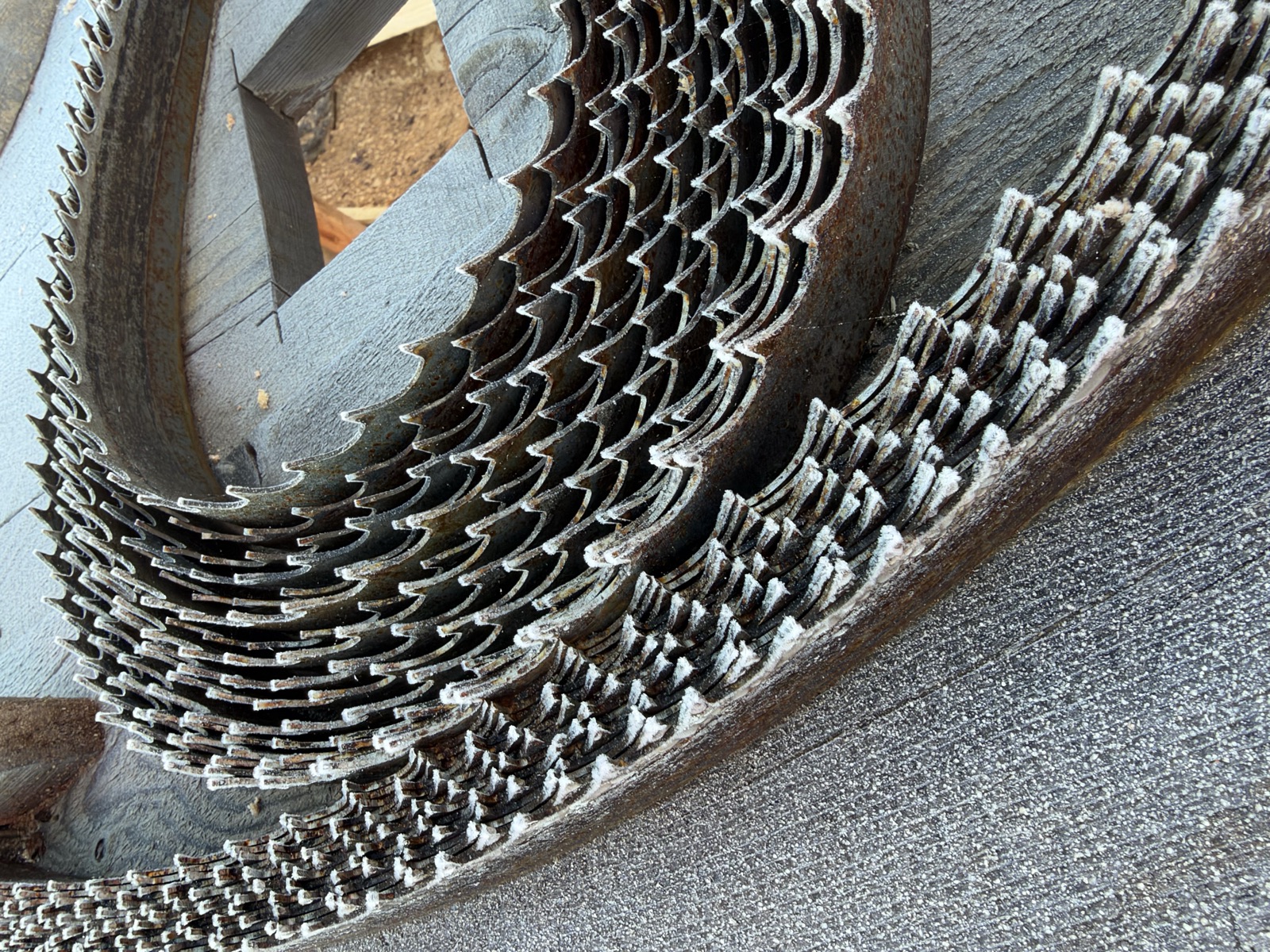
For a long time, my blade strategy was pretty simple. Run it till it smoked, blame myself, and order more.
Okay, maybe it wasn’t quite that bad. But I’ve spent enough time standing behind a sawmill to develop some pretty strong opinions about blades. And like most things in this industry, those opinions have changed as I’ve learned more.
One thing I’ve figured out is that there’s no universal answer to which sawmill blade is the best.
Ask ten sawyers what blade you should run, and you’ll probably get twelve answers. Every one of them will be convinced they’re right, too.
And honestly, they might be. For their mill.
Starting with the LT15
My introduction to bandsaw milling was on a Wood-Mizer LT15, running .042-inch blades.
At that point, I was learning everything. How to read a log, how to feed the blade, how to recognize when something wasn’t cutting right, and how much influence a relatively inexpensive piece of steel had over the quality of the lumber coming off the mill.
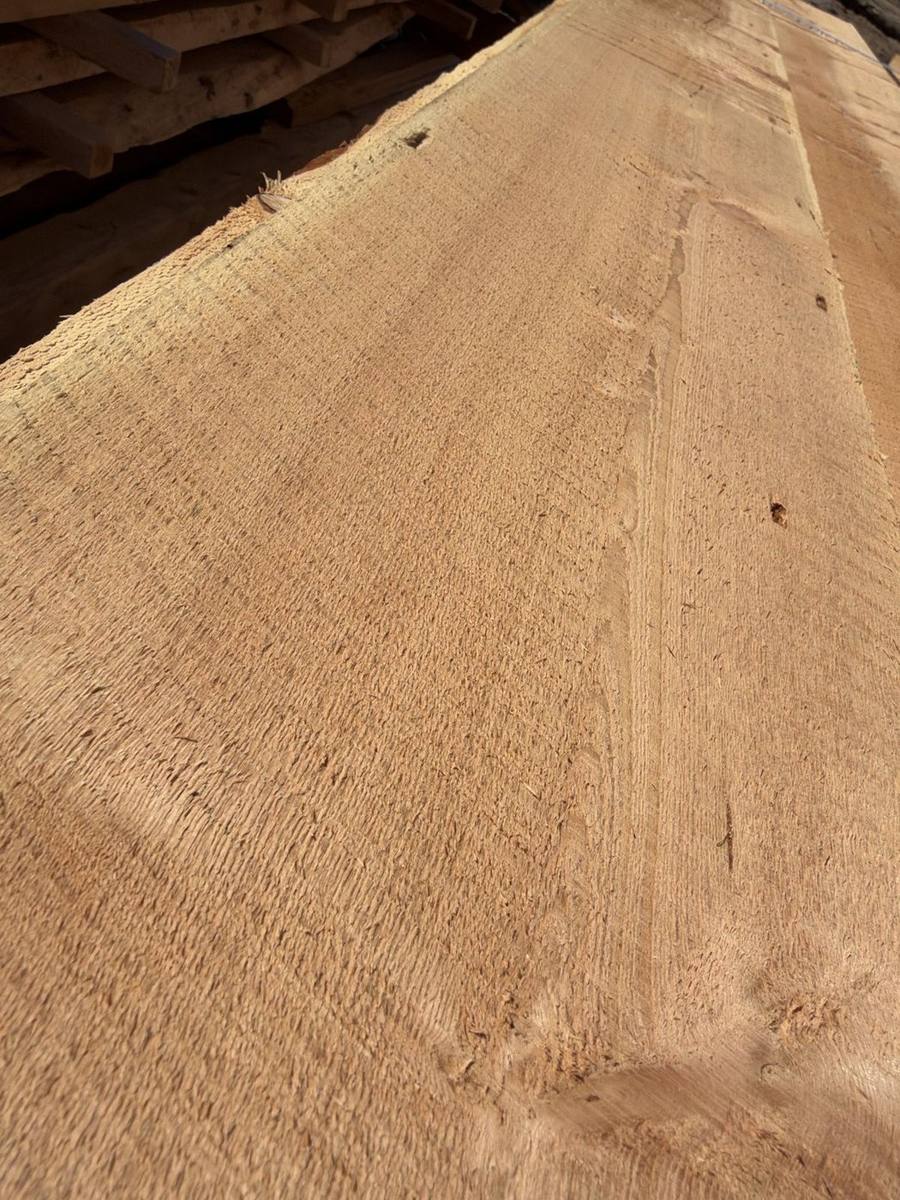
A blade could be sharp and still not cut the way I wanted. It could start wandering, heat up, or leave a surface that looked like I’d been trying to cut lumber with a butter knife.
Sometimes it was the blade. Sometimes it was the mill. And sometimes it was the guy running it.
That last one took a little longer to admit.
Moving to Bigger Mills and Heavier Blades
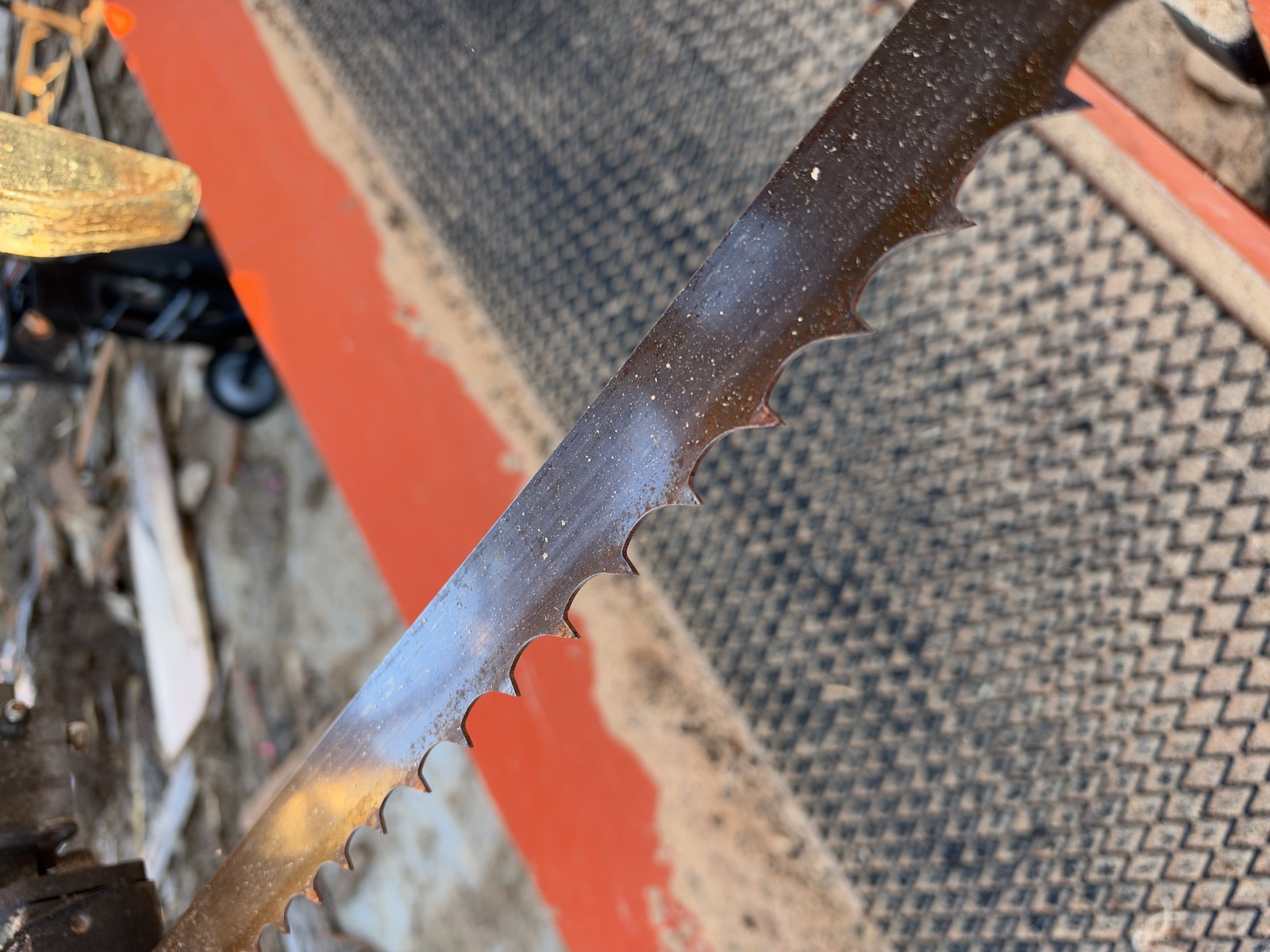
As I moved into the LT40 and eventually the LT70, I started paying more attention to blade thickness.
My thinking was pretty straightforward: I wanted to run the thickest blade I could get my hands on.
A thicker blade generally offers more resistance to deflection, and when you’re pushing through big Douglas fir logs, stability matters.
A blade doesn’t magically cut straighter because there’s more steel in it. The mill has to be capable of controlling it. Blade tension, wheel geometry, guides, feed speed, tooth geometry, and the material you’re cutting all have a say in how that blade performs.
Put too much blade on a machine that can’t properly handle it, and you haven’t solved anything.
You’ve just found a more expensive way to have problems.
Over time, I experimented with .045, .050, and .055-inch blades, trying to figure out what worked best with the equipment we were running.
I wasn’t particularly interested in what looked best on paper. I wanted to know what happened when the blade was buried in a log and we were trying to make lumber.
Width is its own decision. If I had steel band wheels on our LT70, I’d be running a 2 inch wide blade. We don’t have that upgrade, so we run what this setup can handle.
And thick isn’t free. These blades can only go around in a circle so many times before they fail, especially once they’ve gotten really hot. There have been plenty of times I’ve made one cut, hit some dirt, and oops.
Working with Jerry’s Resharp
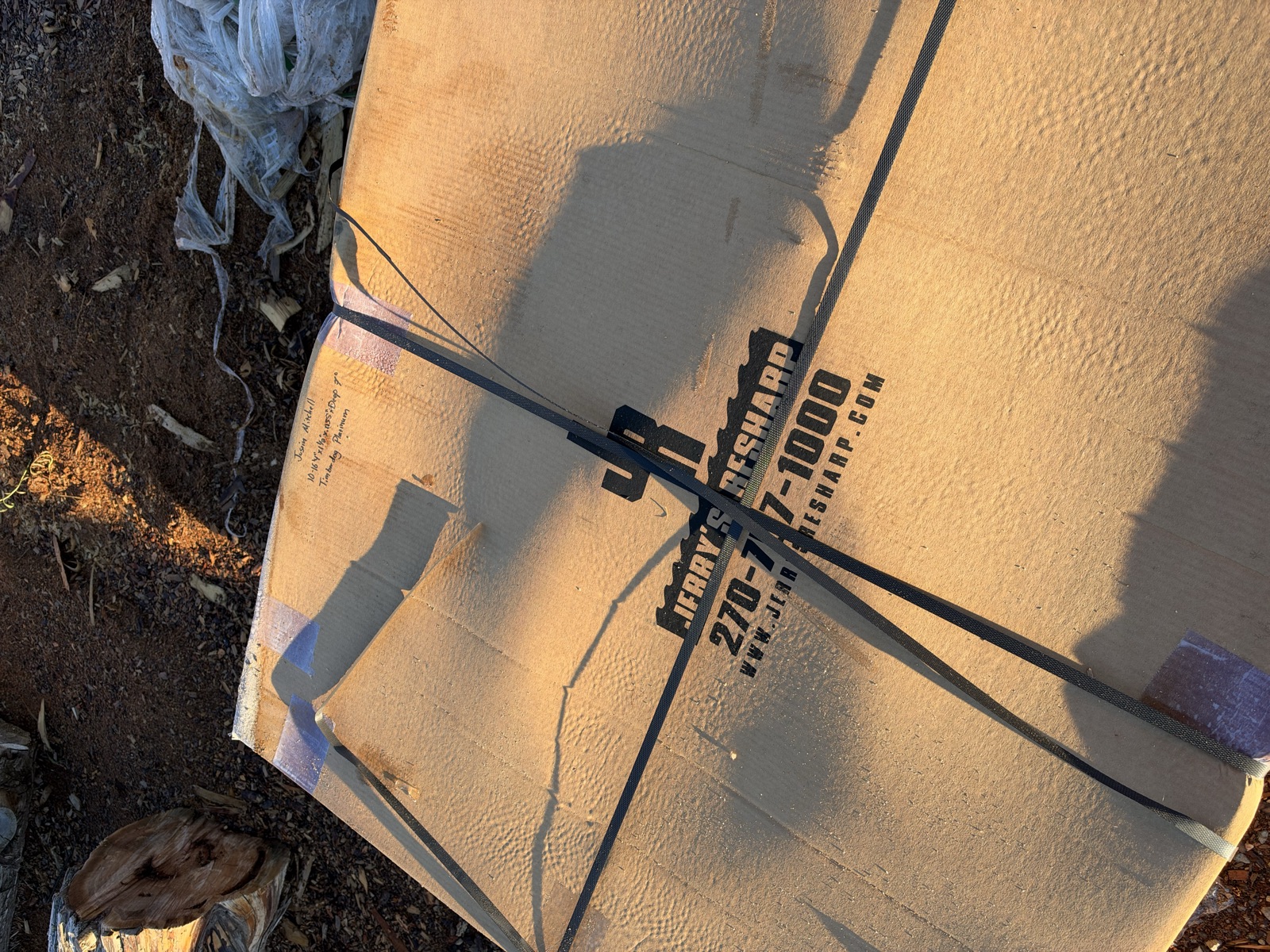
Somewhere along that journey, we started working with Jerry’s Resharp. It’s nice being able to have a conversation with Madden over there. He’s not immediately trying to sell you an expensive blade. He’s just helpful.
And this is where the story becomes about more than just the blade.
There’s something I appreciate about working with a smaller business that understands what we’re doing.
We weren’t just buying blades. We were figuring out what worked for our mills, our cutting conditions, and the kind of material we process.
We’ve tried different blade configurations over the years. Some worked better than others. Some looked promising until we put them into regular production.
That’s just part of figuring things out.
I’ve never been particularly interested in defending a blade simply because of the name stamped on the box.
If it works, it works.
And if it doesn’t, I’m not going to spend six months convincing myself otherwise.
We’ve Tried Some Other Options, Too
Over the years, we’ve experimented with carbide, bimetal, and other blade options.
There are legitimate advantages to different blade materials and tooth designs. Some are better suited to abrasive material, others to particular species or production conditions.
But a blade’s value isn’t determined by how impressive its specifications sound.
It’s determined by what it does on the mill.
How straight does it cut? How well does it hold up? How consistently can we feed it? How much time are we spending changing blades or dealing with problems?
And ultimately, what does it cost us to turn a log into usable lumber?
A blade that lasts longer isn’t necessarily cheaper if it slows down production or creates more work somewhere else.
That doesn’t mean those other blades are bad. It means they haven’t all been the right answer for what we’re doing.
Not too long ago we bought a bunch of Wood-Mizer blades and had great results with them. We gave them a real shot. Ultimately, I still landed with Madden.
Why We Don’t Resharpen
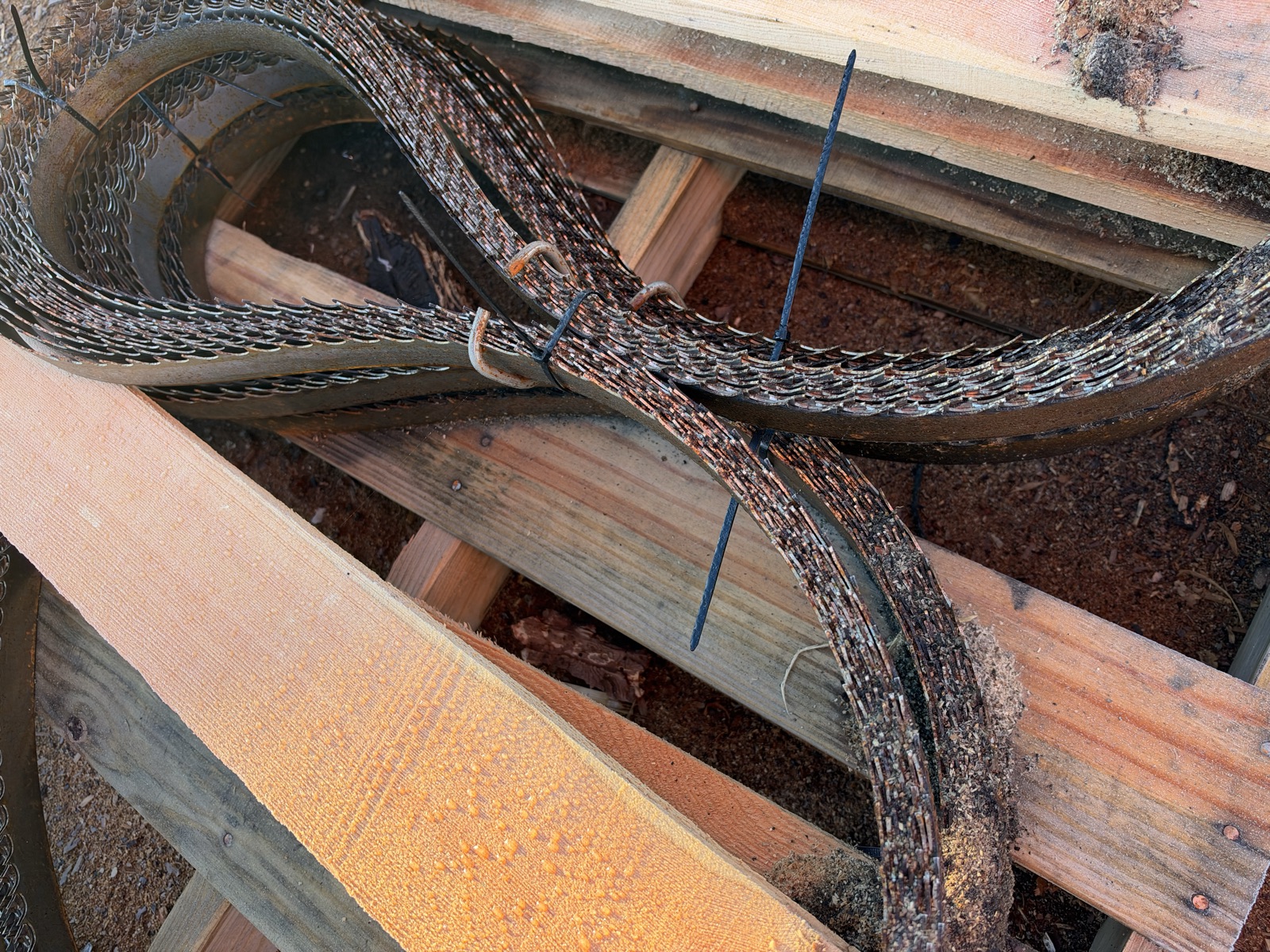
This is one that gets people fired up.
We own a blade sharpener. We’ve experimented with resharpening. I haven’t sharpened a blade in three years. And I’m well aware that a bandsaw blade can be sharpened and used multiple times.
There are mills that have built very effective systems around doing exactly that.
Good for them.
But we also have to look at the economics of our particular operation.
Blades aren’t free. We go through a lot of them, and we order 80 to 100 at a time.
But when I look at the time required to properly sharpen, set, inspect, and maintain those blades, along with the equipment required to do it consistently, I have to ask whether that’s the best use of our time.
Our current sharpening setup isn’t where I’d want it to be for regular production. Once I realized I didn’t have time for it, sawing wood paid a lot better than sharpening blades.
And pulling someone away from making lumber to save a relatively small amount on a blade doesn’t automatically make financial sense.
There’s a difference between saving money and making money.
I don’t need to squeeze every last possible cut out of a blade if doing so costs us more somewhere else.
We’re in year 4 of this business, and the goal is to keep growing it. Down the road I imagine we’ll have a good sharpener and offer sharpening to the public. We’re just not there yet. Right now, replacing blades makes more sense for us.
Why We Buy from a Smaller Business
Here’s another part of this decision that matters to me.
We buy plenty of equipment from Wood-Mizer.
We’ve owned multiple Wood-Mizer sawmills, and we’re planning to continue investing in their equipment as we grow.
They’ve built machines that have helped us build our business.
But that doesn’t mean every consumable we purchase has to come from the same company.
When it comes to blades, we’ve chosen to work with a smaller supplier.
And I like that.
We order blades 80 to 100 at a time. Over the course of a year, that adds up to a meaningful amount of business.
Is that going to make or break Wood-Mizer’s profits? Probably not.
But those orders can mean a whole lot more to a smaller company.
If we can get a blade that performs the way we want, at a price that makes sense, from people we enjoy doing business with, why wouldn’t we?
We’re a small business ourselves.
I understand what it means when somebody chooses to spend their money with us instead of a much larger supplier.
And I appreciate the opportunity to do the same.
That doesn’t mean we blindly support a business just because it’s small. The product still has to perform.
But when the product works and the relationship is good, supporting that business becomes a pretty easy decision.
What I’d Tell Someone Choosing a Sawmill Blade
If somebody asks me what blade they should run, I’m not going to pretend I have the perfect answer.
I don’t know their mill, the condition it’s in, what species they’re cutting, or how they’re operating it.
But I can tell them what I’ve learned.
Pay attention to the tooth geometry and how it performs in the material you’re actually cutting.
Don’t assume a more expensive blade is automatically better.
Don’t assume a thicker blade is automatically better.
And don’t get so attached to a brand that you stop paying attention to the results.
Experiment. Watch your cuts. Learn what the machine is telling you.
There’s a lot more to running a sawmill than putting a sharp blade on it and pushing forward.
Although, on a good day, that’s exactly what it feels like.
Where We’ve Landed
After all the experimentation, we’ve settled into a system that works for JAMCo.
Right now that’s a 1-1/2 inch, .055 Timber Dog Platinum on the LT70, from Jerry’s Resharp. We run blades our mills can control, replace them when they’re no longer doing the job, and buy them from a smaller business we’ve chosen to support.
That doesn’t mean we’ve found the ultimate sawmill blade.
It means we’ve found something that works for us.
And that’s really the point.
We’re not trying to win an argument about which blade is best.
We’re trying to make good lumber, keep the machines running, and get another log on the mill.
Keep it sharp, keep it stable, and let it eat.