Urban Wood Utilization in Western Colorado: Giving Community Trees a Second Life
Every community has them.
Drive behind a public works yard, parks department, or municipal maintenance facility and you'll often see a growing pile of logs stacked off to one side.
If you've ever driven past one, you've probably had the same thought I have for years.
"What are they going to do with those?"
Are they going to use them?
Burn them?
Bury them?
Every time I'd pass one of those piles, I'd wonder where those trees eventually ended up. I never really had an answer. I just knew it felt like there had to be a better story waiting inside that pile than simply calling it waste.
Recently, I had the opportunity to spend time with representatives from the Colorado State Forest Service, a local municipality, and members of the Urban Wood Network discussing exactly that question.
Not every removed tree should become lumber.
That was probably the biggest takeaway from the day.
Some trees are too decayed.
Some contain metal.
Some have structural defects.
Others simply aren't worth transporting or milling.
But another lesson stood out just as much.
Not every tree belongs in a landfill either.
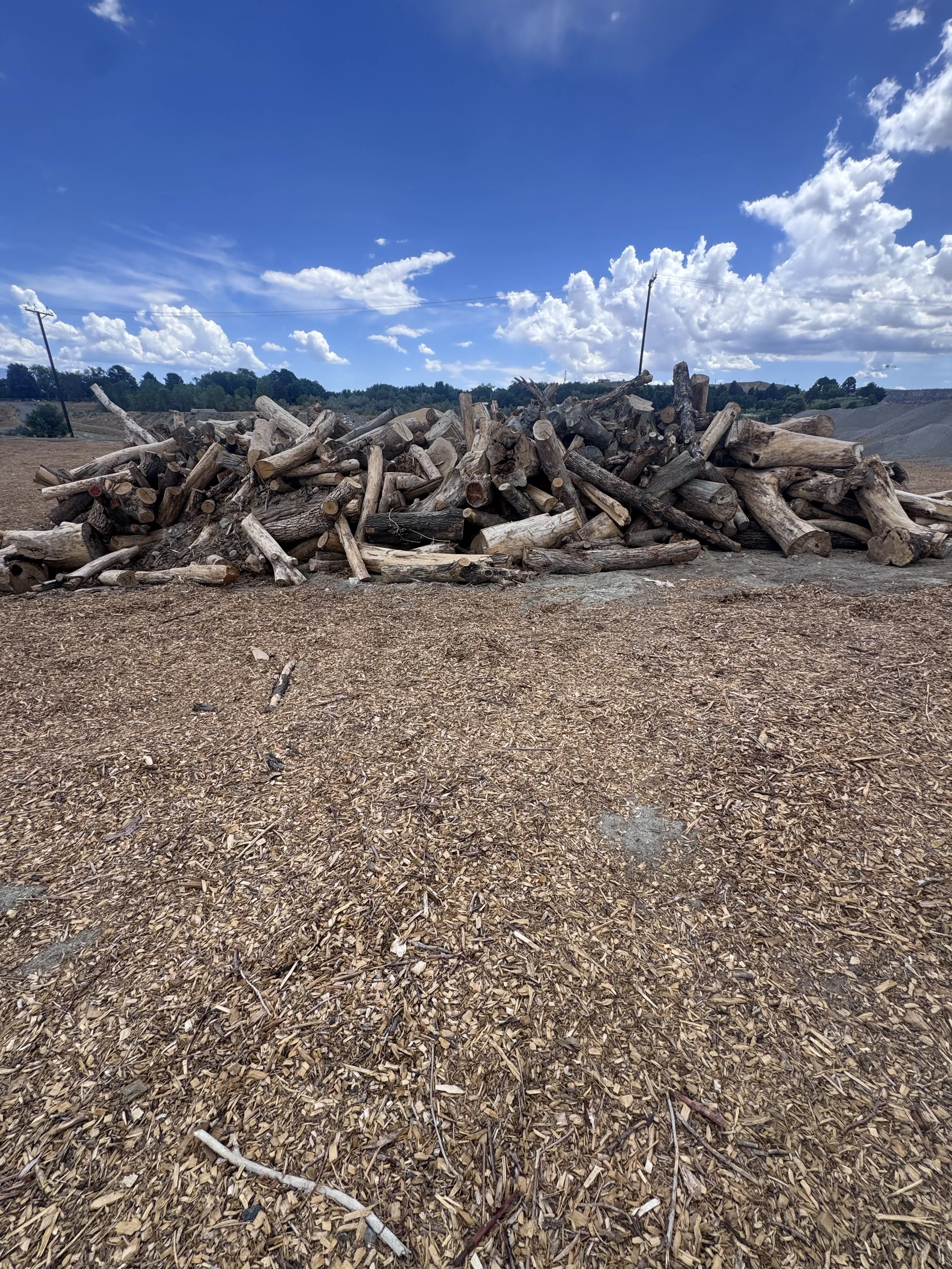
What Is Urban Wood?
Urban wood refers to trees removed from cities, neighborhoods, parks, schools, golf courses, commercial properties, and residential landscapes.
Unlike timber harvested from managed forests, these trees have spent decades growing around people.
They've survived sidewalks, fences, irrigation systems, construction, power lines, playgrounds, pruning, storms, nails, screws, and everything else that comes with living in an urban environment.
That means they often contain more character and more challenges than traditional timber.
But it also means they tell a story.
Looking Beyond Lumber
As a sawmill owner, people probably assume I looked at every log wondering how many boards it could produce.
Honestly, I didn't.
The question I kept asking myself was much simpler.
"What is this tree's highest and best use?"
Sometimes that's lumber.
Sometimes it's a live-edge slab.
Sometimes it's beams.
Sometimes it's firewood.
Sometimes it's mulch.
Sometimes it's wood chips.
The point isn't to force every log into a sawmill.
The point is to stop assuming every removed tree has the same destination.
The Urban Wood Network
One of the things I appreciated most was learning more about the work being done through the Urban Wood Network.
The Urban Wood Network brings together municipalities, foresters, arborists, sawmills, woodworkers, researchers, nonprofits, and businesses that believe removed trees deserve thoughtful evaluation before they're discarded.
Their goal isn't to convince every city to mill every tree.
Their goal is much more practical.
Help communities identify the highest and best use for every tree they remove.
Sometimes that means lumber.
Sometimes it doesn't.
Either way, the decision is intentional.
That's good stewardship.
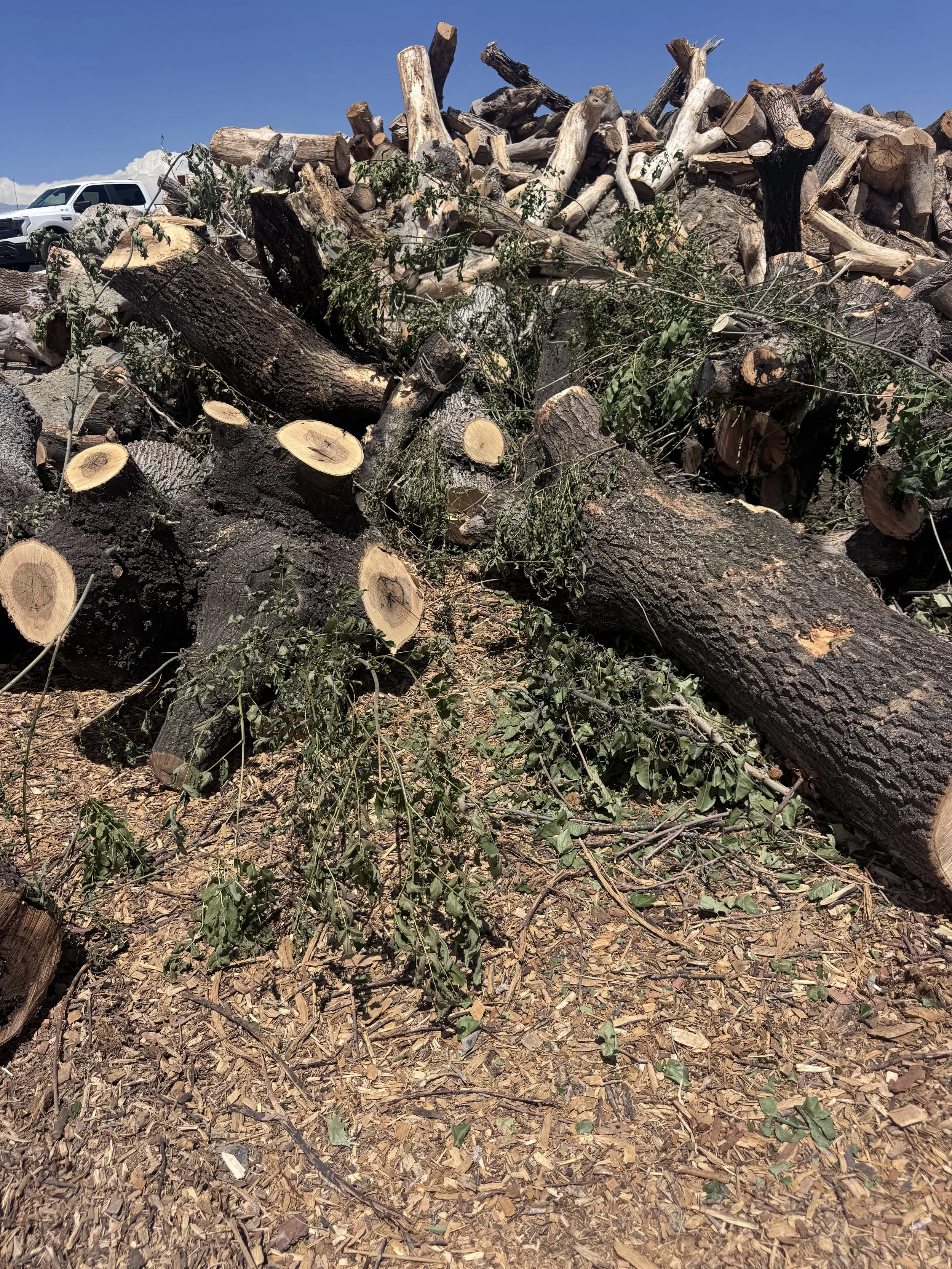
A Better Partnership
One conversation that kept coming up was how municipalities and local businesses could work together more effectively.
Instead of letting logs accumulate for years, what if they were periodically evaluated?
A sawmill could recover usable logs.
Firewood producers could utilize lower-grade material.
Brush could become mulch or biomass.
Material with no practical use could still be disposed of responsibly.
Instead of every tree following the same path, each one could follow the path that makes the most sense.
More Than Lumber
Communities spend decades growing these trees.
They're planted by volunteers, city crews, developers, and homeowners.
They're watered.
Pruned.
Protected.
Maintained.
Eventually, someone has to remove them.
If we've already invested fifty, seventy, or even one hundred years growing a tree, shouldn't we at least ask whether it has one more chapter left?
That isn't about maximizing profit.
It's about respecting the resource.
Logs to Living
At JAMCo Woodworks, our mission has always been "Logs to Living."
The more time we spend working with local trees, the more that phrase continues to evolve.
It's no longer just about turning logs into lumber.
It's about asking a better question.
"What could this become?"
Maybe it's a dining table.
Maybe it's a fireplace mantel.
Maybe it's dimensional lumber.
Maybe it's firewood that keeps a family warm through the winter.
Whatever the answer, we believe every tree deserves someone willing to ask the question before calling it waste.
As conversations around urban wood continue to grow across Colorado, we're excited to be part of the effort to connect municipalities, tree services, property owners, and local wood businesses in ways that create value for everyone involved.
Sometimes the difference between waste and value isn't the tree.
It's simply whether someone took the time to imagine a different ending.
Frequently Asked Questions
What is urban wood?
Urban wood is wood recovered from trees removed from cities, neighborhoods, parks, campuses, commercial properties, and residential landscapes instead of traditional forest harvests.
Can removed city trees become lumber?
Many can. Species, condition, size, and the presence of defects or metal determine whether a tree is suitable for milling.
What is the Urban Wood Network?
The Urban Wood Network is a collaborative effort that connects municipalities, arborists, foresters, sawmills, woodworkers, and businesses to encourage the beneficial use of removed community trees.
Does JAMCo Woodworks work with municipalities?
Yes. We're interested in partnering with municipalities, tree services, HOAs, and property managers throughout Western Colorado to help identify the highest and best use for removed trees.
Do you buy logs?
Yes. We purchase select logs based on species, size, accessibility, and condition.
SEO Title:
Urban Wood Utilization in Western Colorado | Giving Community Trees a Second Life
Meta Description:
Learn how urban wood utilization helps municipalities, arborists, and sawmills give removed community trees a second life through lumber, slabs, firewood, and other valuable wood products.
Suggested URL:
/urban-wood-utilization-western-colorado