Douglas Fir: The Local Wood That Carries the Load
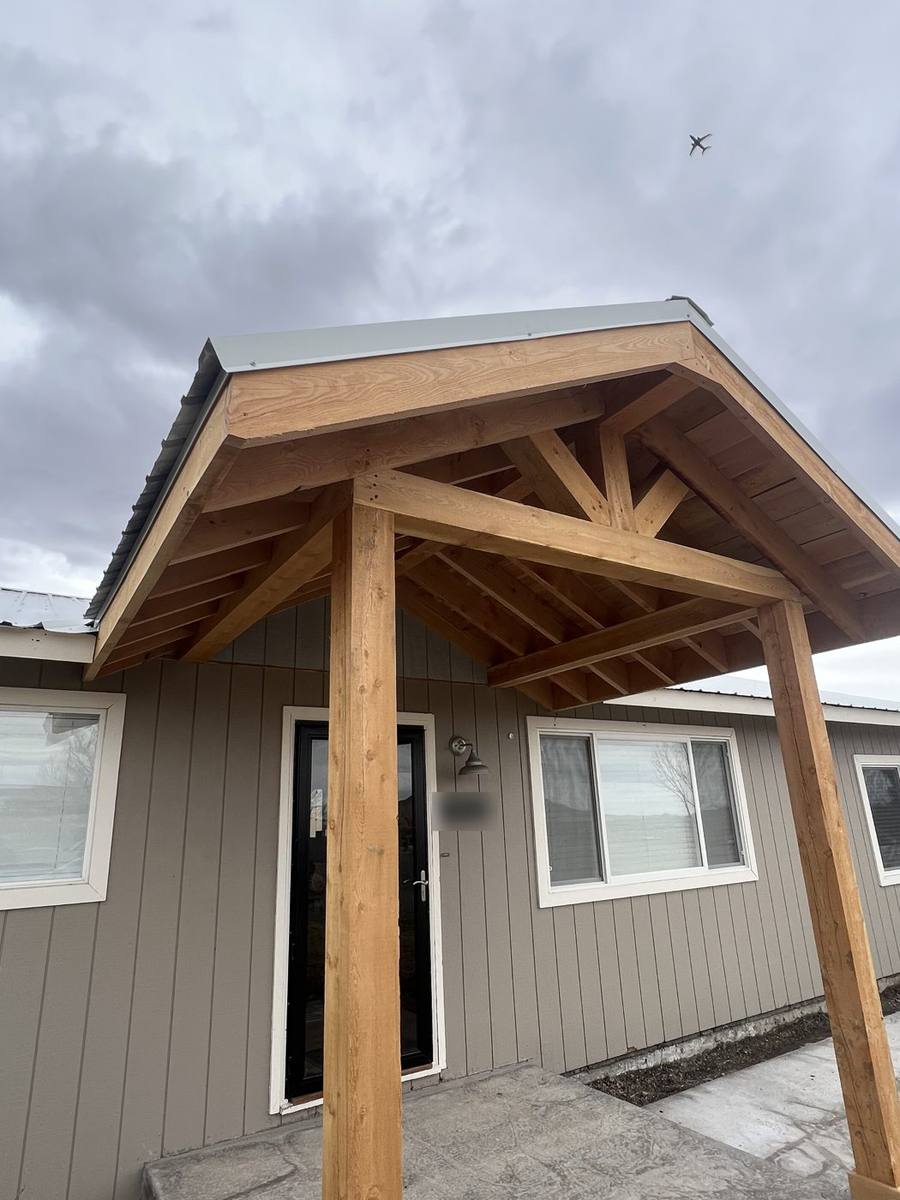
When a project has to carry weight and still look good doing it, we reach for Douglas fir. It is our go-to for timbers and beams, from 6x6 and 8x8 up through 10x10 and 12x12, along with posts, rafters, pergolas and timber-frame entries. It also makes tongue and groove and exposed ceilings with more presence than ordinary pine, and big mantels with real character at a softwood price.
Tight rings from steep ground
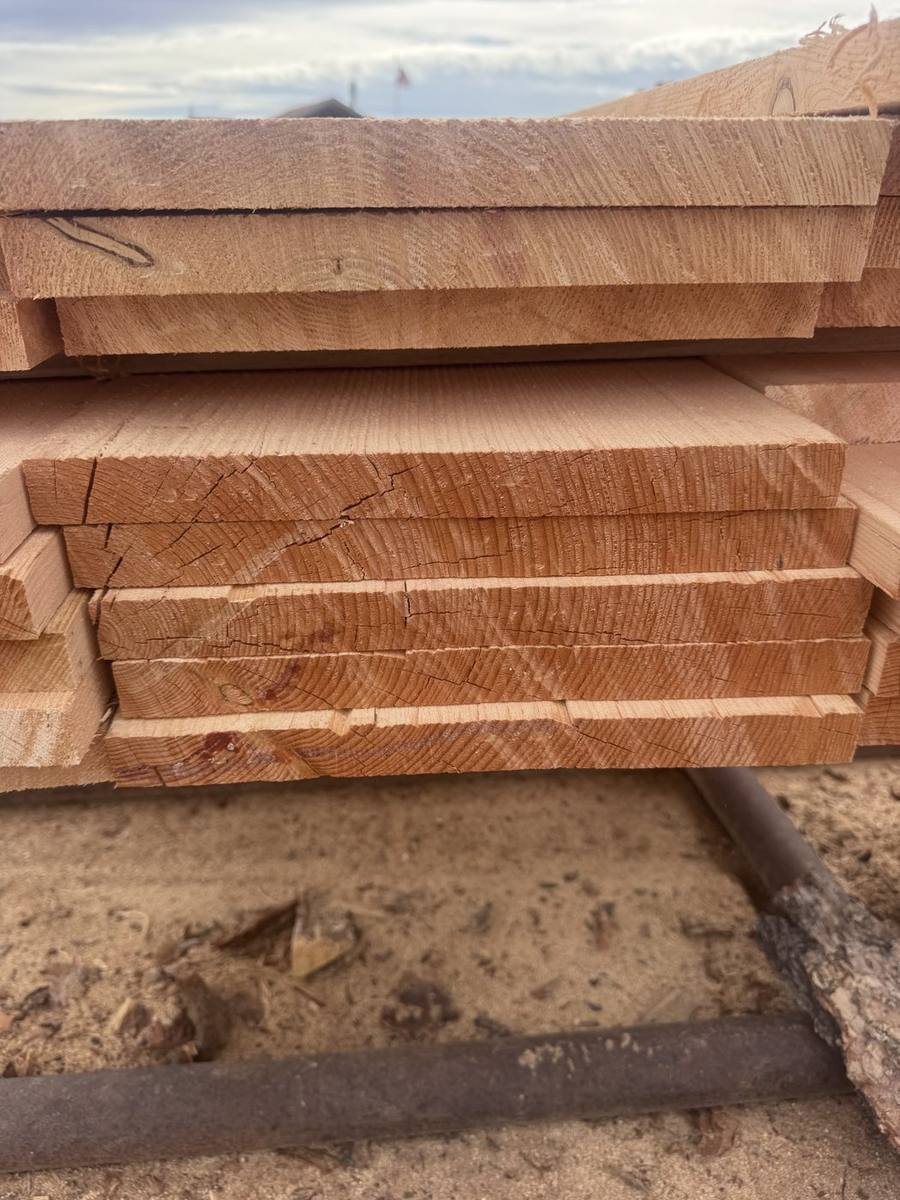
Our fir grows slowly on steep Western Slope hillsides, and you can see it in the rings, which run about 10 to 20 to the inch. A random 6x10 in the yard once measured 16 rings in a single inch. That tight grain is a big part of why our fir does not shrink much as it dries. It is worth being straight about one thing, though: inland fir and coastal fir are different woods, and lab averages put Colorado fir a little less stiff than the coastal stuff. It is stout, it is local, and for posts and beams it is still the first wood we recommend.
Doug fir rarely grows on flat land. It comes out of a hillside sideways, then turns and climbs toward the light, competing with everything around it. A tree with a 24 inch top section around 30 feet up is typically about 250 years old. That hillside life also builds stress into the wood, which is why the sawyer reads every log before deciding what gets cut where.
What fir is not for
Fir is a softwood, so it dents and scratches far easier than ash or elm. For countertops, stair treads, workbenches and floors that take a beating, go with a hardwood. Local fir is not clear, factory-perfect lumber either. Expect knots, pitch pockets, checks and some surprises, and if you need every board to look like clear vertical-grain architectural fir, we should talk before you order.
The biggest headache we see is green fir used as interior finish. A green 12x12 can check substantially as it dries, and green tongue and groove can shrink and open gaps on your ceiling. Know whether you are buying green, air dried or kiln dried, and tell us where it is going. Here is how to pick.
Drying and the pitch set
Fir dries slower than spruce, and we dry it as slowly as we can. Fir also carries pitch, so finished fir like tongue and groove gets a pitch set in the kiln, which crystallizes the sap so it does not ooze out of a board in your living room some July. Timbers with the heart in them will check. If a green timber is going to check, it usually shows within the first 10 days, so let it rest, see where the check lands and face it where you will not see it.
Why fir costs more
A fir log can look perfect from the outside and open up with rot, shake, hidden knots or compression wood once it is on the mill. Getting good boards out of fir takes more log, especially in 1 inch stock, and that is why it costs more than spruce or pine. Wide fir like a 1x12 is possible, but Colorado does not grow many big trees, so ask before you design around it.
Fir is fantastic when you let it be fir: strong, structural, beautiful and a little rustic. It only gets frustrating when it is expected to behave like dry hardwood or factory-made material.