Stacking, Stickering and Kiln Drying: Where Good Lumber Is Made
Sawing is the fun part of milling, and it is also the part that takes the least time. Most of what decides whether a board is any good happens afterward, while it sits in a stack looking like it is doing nothing.
Why wood has to dry
A fresh-cut board is full of water, and as that water leaves, the board shrinks. When it leaves evenly you get a flat board. When one face dries faster than the other, you get a potato chip. Dry on the outside is not dry, either. A board can feel finished and still be wet in the middle, and that is the one that moves on you a month after it is nailed up.
What a sticker does
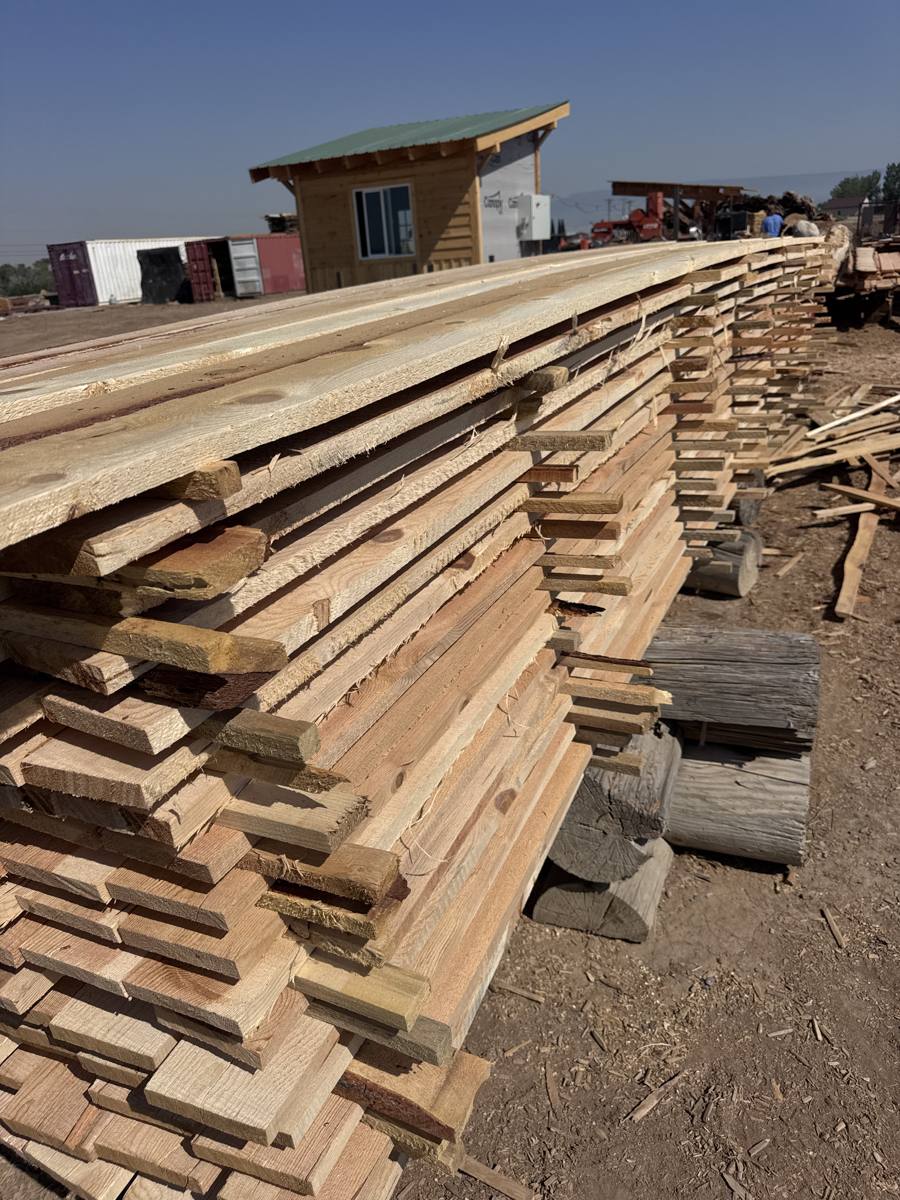
A sticker is a thin, dry strip of wood laid between every layer of a stack, and that is the whole technology. It holds the boards apart so air can reach every face. Without stickers there is no airflow, and without airflow the middle of the stack stays wet, stains and starts growing things.
How we stack
Every stack starts on a level base, because a stack on a crooked base dries crooked. Each layer is boards of the same thickness, and every sticker sits straight above the one below it, all the way up. If a sticker is out of line, the board above it sags into the gap, learns that shape and keeps it. We use 1x2 stickers spaced 18 to 24 inches apart, then put as much weight on top as we can. Pine shows why: it comes in soaking wet and dries fast and flat, as long as the weight stays on it.
Air first, always
Everything is air dried before it goes anywhere near the kiln, and our climate does a lot of that work for free. A quarter inch board is close to dry by the end of a summer afternoon, and a one inch board that came in soaked gets down around 15% in about two weeks of summer. Winter takes a lot longer. Fir dries slower than spruce, and pine shows up wetter than both. Fast is not always good, though. Hardwoods and slabs go as slowly as we can make them, covered and in the shade, because a rushed slab checks.
Then the kiln
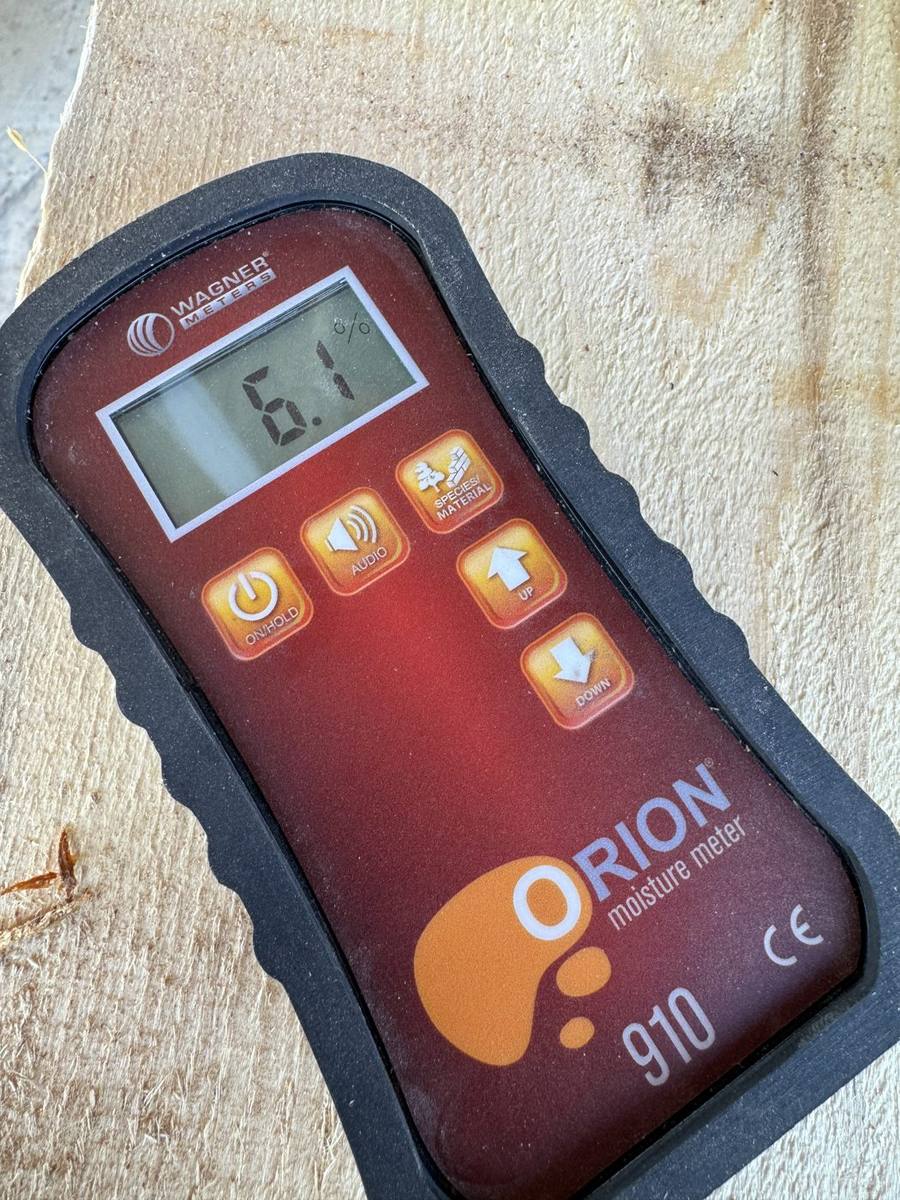
Nothing goes in our kiln above 20% moisture, because kiln time on wet wood costs more and beats the wood up. We meter every load going in and coming out. One inch softwood that goes in under 20% takes about 7 days, and closer to 5 if it starts around 15%. Thicker stock takes longer. A full load is about 2,400 board feet, set in with the skid steer or the telehandler and stickered the same way it sat outside, so the kiln air reaches every face. Thursday is kiln swap day: one load out, the next one in.
Fir gets one more step, the pitch set. Fir carries pitch, and left alone it can ooze out of a board years later. The pitch set crystallizes the sap so it stays put.
What stays out of the kiln
Timbers. We can kiln dry them, but we do not recommend it, because it costs strength and our climate air dries them well. Most of our timbers have the heart in them, since Colorado trees run small, and they will check. If a timber is going to check, it usually shows in the first 10 days.
When it gets to your place
Your order leaves here stacked and stickered, and it should stay that way: off the ground, stickers lined up, weight on top and out of the weather. Wood is gonna wood. Our job is to make sure it does most of that here, and not on your ceiling.